As an Amazon Associate I earn from qualifying purchases.
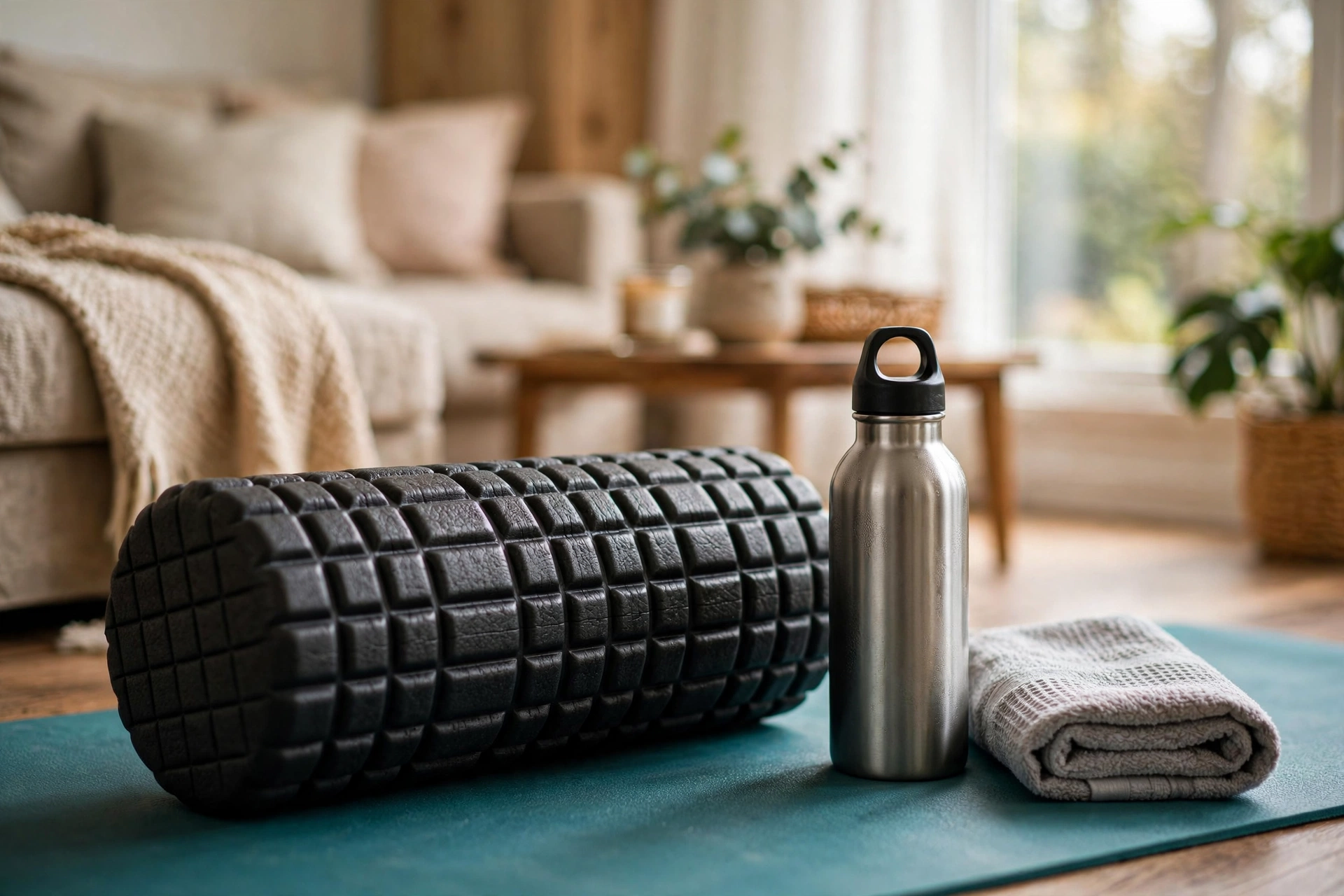
By the end of the day, your body keeps the score: tight shoulders from carrying kids and grocery bags, a stiff back from the desk or the driver’s seat, legs that feel like concrete. The TriggerPoint GRID is built for exactly that wind-down — a compact foam roller with a textured surface designed to work tight muscles the way a massage therapist’s hands would, in about five minutes on the living room floor.
Quick verdict: This is the foam roller for moms who’ve outgrown the basic smooth kind, or who want one roller that can go gentle or deep depending on where you position it. It’s firmer than entry-level rollers and pricier than the plain foam tubes — but it’s also the one owners report still using years later, because it doesn’t flatten out.
Check the current price on Amazon.ca →
What makes the GRID different
A basic foam roller is one density all over. The GRID’s surface has three zones, meant to mimic a therapist’s hands:
- Flat panels — like a palm: broad, gentler pressure for big areas like your back and thighs
- Tubular ridges — like fingers: medium pressure that works along a muscle
- Firm nodules — like fingertips: focused pressure for knots in glutes, shoulders, and calves
Roll a sore spot onto a different zone and the intensity changes — no second tool needed. Underneath the EVA foam surface is a rigid, hollow core, which is why this roller keeps its shape instead of compressing flat the way cheap solid-foam rollers do.
The specs that matter
- Size: 33 cm × 14 cm (13 in × 5.5 in) — compact enough for a gym bag or a closet corner
- Weight: about 0.65 kg (1.4 lb)
- Weight capacity: 227 kg (500 lb)
- Surface: EVA foam — sweat-resistant and wipes clean
- Warranty: 1 year
- Bonus: free access to TriggerPoint’s online video library of foam-rolling tutorials, which genuinely helps if you’re new to this
The honest pros and cons
What’s great:
- Three pressures in one roller. Tender muscle? Use the flat zone. Stubborn knot? Roll it onto the nodules.
- Built to last. The hollow-core design is the reason owners report these holding up for years of regular use.
- Truly portable. At 33 cm (13 in) it fits in a gym bag, a suitcase, or beside the couch.
- Easy to clean. The EVA surface wipes down — no fabric to get grimy.
- Good guidance for beginners. The free video library teaches proper technique, so you’re not guessing.
What to know before you buy:
- It’s firm. This is the most common surprise. If you’ve never foam rolled, the first few sessions can feel intense — that’s normal, and starting with the flat zones and short sessions helps.
- Short length means repositioning. At 33 cm (13 in), you can’t roll the full width of your back in one pass the way a long roller allows. You work one side, then the other. (The longer GRID 2.0 below fixes exactly this.)
- Costs more than basic rollers. You’re paying for the multi-density surface and durability, not just foam.
- It can shift on slick floors. On polished hardwood or tile it may slide a little mid-roll; a mat underneath fixes that.
A 5-minute post-day routine
This is the wind-down our readers ask for most. Move slowly — roughly 2–3 cm (an inch) per second — and when you find a tender spot, pause and breathe on it for 20–30 seconds instead of grinding back and forth.
- Upper back (1 minute): Roller under your shoulder blades, hands behind your head, roll slowly up and down. Never roll directly on your lower back or neck.
- Glutes (1 minute each side): Sit on the roller, cross one ankle over the opposite knee, lean toward the crossed side, and roll. This is where the nodules earn their keep.
- Calves (1 minute): Roller under your calves, hands behind you for support, roll from ankle to just below the knee.
- Thighs/quads (1 minute): Face down, roller under your thighs, forearms on the floor, roll from hip to just above the knee.
Skip rolling directly over joints, and stop if anything feels sharp rather than sore.
Who it’s for (and who should skip it)
Perfect for: moms who train, run, or just end the day with tight, achy muscles and want one durable roller that adjusts from gentle to deep.
Skip it if: you’re brand new to foam rolling and know you’re sensitive to pressure — start with a softer, smooth roller and graduate to this. Also skip it if you specifically want full-back rolling in one pass; a longer roller suits that better.
Want full-back coverage? Step up to the GRID 2.0
Everything above comes in a longer version: the TriggerPoint GRID 2.0 is 66 cm (26 in) — double the length — with the same three-zone surface, hollow core, and 227 kg (500 lb) capacity. The extra length lets you roll your whole back in one pass and gives bigger bodies more stability. It costs more and takes up more room, so it’s the pick if back work is your main goal and portability isn’t.
See the GRID 2.0 on Amazon.ca →
The bottom line
The GRID costs more than a basic foam tube because it does more: three pressure zones, a core that doesn’t flatten, and a size that actually fits a busy household’s storage. If end-of-day tightness is your norm, five minutes with this is one of the cheapest recovery habits you can build.
See today’s price on Amazon.ca →
Prices and availability change frequently on Amazon — the link above takes you to the current listing so you can check today’s price and read recent reviews before deciding.